About Quick Die Clamping System
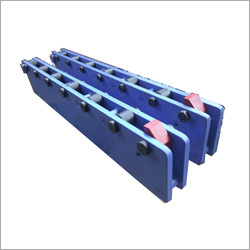
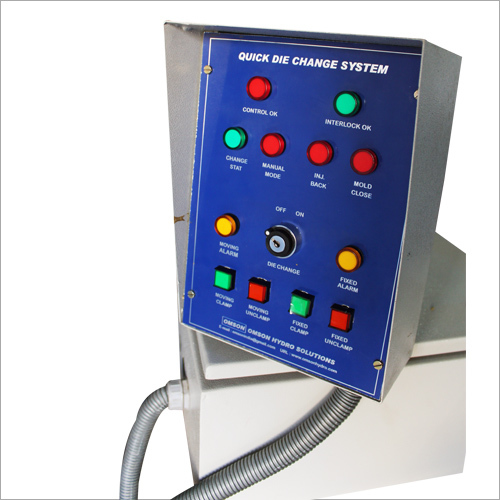
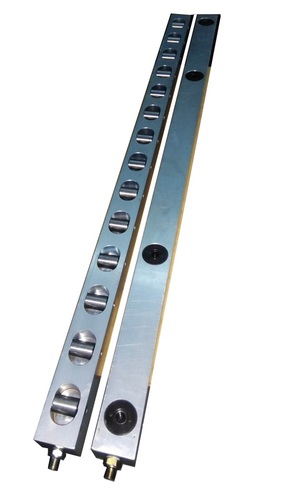
QUICK DIE CLAMPING SYSTEM (QDC):- It is a must for the manufactures that their plant operation is capable of compromising the needs of decreasing production lot and increasing variation of products and at the same time shortening of delivery time & lowering the production cost.
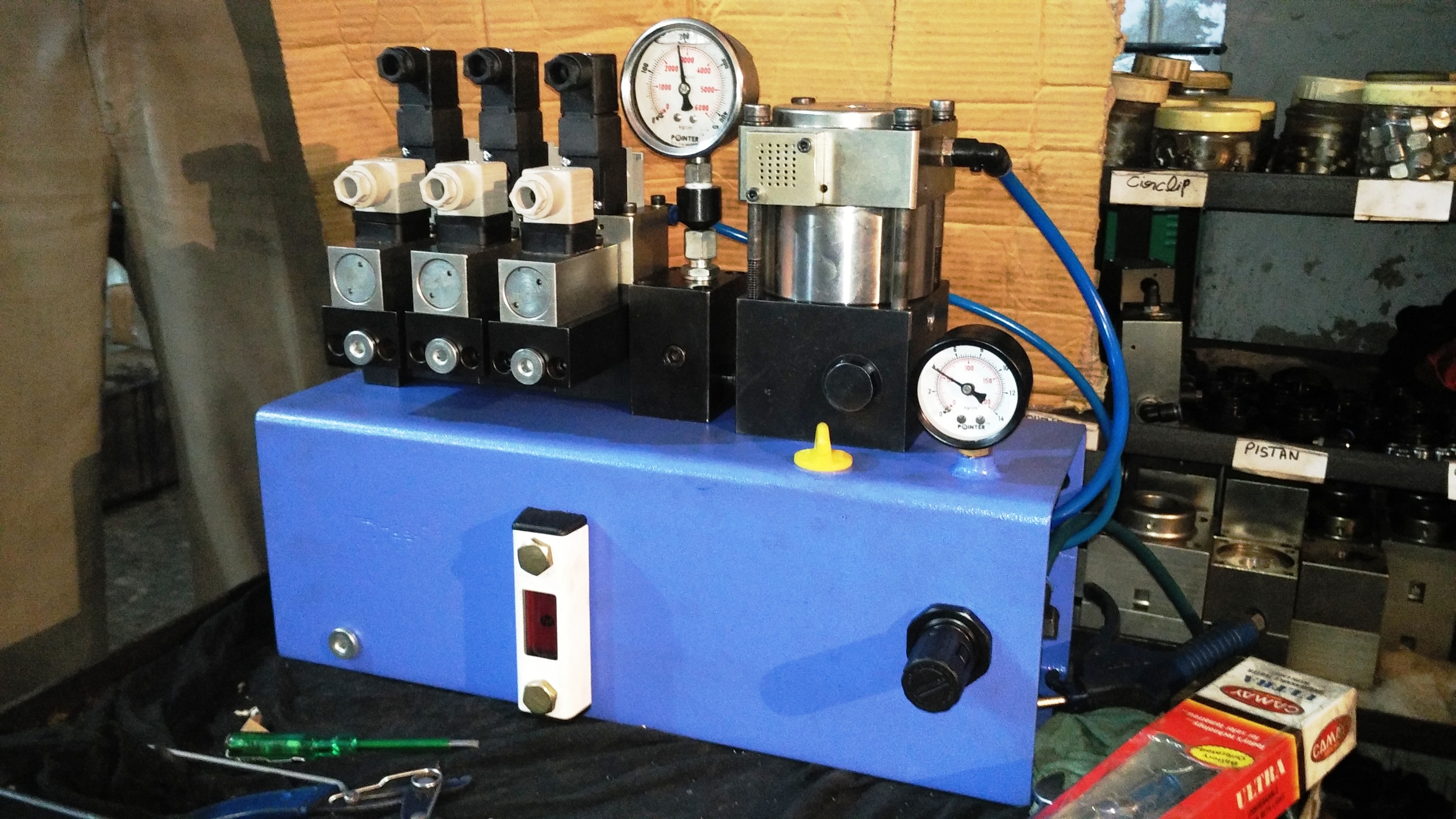
This high-performance, compact OMSON Clamping unit can generate high hydraulic pressure from compressed air. The air/hydraulic balance design maintains a constant pressure without consuming any energy. At the balanced condition, there is no air consumption so that there is no power loss or temperature rise compared to an electric pump.
In the event of an air supply failure, the hydraulic pressure shall be retained by the check valve built-in the discharge side. Once pressure is lost, the unit immediately responds to pump up the pressure to the designated level.
Product Details
|
No of Circuit
|
3
|
|
Power Consumption
|
5 kg air pressure
|
|
Brand
|
Omson
|
|
Size
|
8 x 12 x 10
|
|
Automation Grade
|
Automatic
|
|
Weight
|
10 kg
|
|
Voltage
|
24 v DC
|
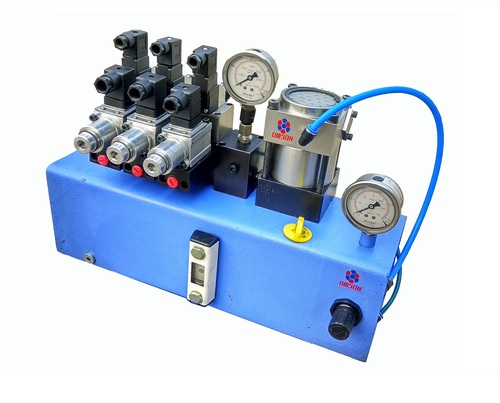
Fast, Reliable Die Clamping SolutionEngineered for heavy-duty applications, the Quick Die Clamping System delivers rapid changeovers, reducing downtime in automotive, sheet metal, and stamping lines. With its high clamping force, 100% QC inspection, and cycle time under 10 seconds per clamp, this system boosts your production efficiency while ensuring uncompromised safety and durability.
Flexible Installation and OperationThis system offers both standard and custom mounting options, fitting seamlessly into various press machine setups. It supports hydraulic, mechanical, or pneumatic actuation, with manual or automatic controls available, ensuring compatibility with your operational requirements whether you need a single clamp or a complete setup tailored to your process.
Safety and Maintenance AdvantagesFeaturing integrated safety interlocks and low-maintenance components, the Quick Die Clamping System minimizes risks to operators and maintenance teams. Powder-coated or plated for extended life and reliability, this clamp is designed to function consistently in challenging conditions while keeping upkeep straightforward and cost-effective.
FAQs of Quick Die Clamping System:
Q: How does the Quick Die Clamping System improve die changeover times?
A: The system ensures rapid die changeover with a clamping cycle time of less than 10 seconds per clamp, significantly reducing downtime in press machine operations and increasing throughput efficiency.
Q: What industries and applications are best suited for this clamping system?
A: The Quick Die Clamping System is ideal for heavy-duty applications in the automotive, sheet metal, and stamping industries, where fast, reliable, and high-force clamping is essential for productivity and safety.
Q: When should the Quick Die Clamping System be used instead of manual clamps?
A: Use this system when your operation requires quick die changes, high clamping force, enhanced safety interlocks, and consistent performanceespecially in high-frequency or heavy-duty press applications where manual clamps cannot meet cycle, safety, or force requirements.
Q: Where can this clamping system be installed?
A: It can be installed on a variety of press machines, with options for both standard and custom mounting to suit different machine sizes and configurations. Model-dependent dimensions and flexibility ensure a fit for most industrial press setups.
Q: What is the maintenance process for the Quick Die Clamping System?
A: Maintenance is minimal due to its robust alloy/hardened steel construction and powder-coated or plated finish. Routine checks and lubrication, as specified by the manufacturer, are recommended for optimal reliability and longevity.
Q: How does the built-in safety interlock work?
A: The integrated safety interlock prevents unintentional release or clamping, ensuring that die changes occur safely and only under proper operational conditions. This reduces the risk of accidents during high-frequency operation.
Q: What are the power requirements and control options available?
A: The system supports both hydraulic and electric models that operate on 230V or 415V AC, in single or three-phase configurations. Users can choose between manual or automatic control systems to best fit their production environment.